
There was a definite divide at this year's Paris Motor Show: heritage versus China. While the likes of Stellantis offered a glimpse of the future through some delightful heritage-inspired concepts, the sheer scale of what the Chinese manufacturers brought along was impossible to ignore.
For years, European manufacturers have largely dictated what the rest of the world should aspire to drive. German engineering. French innovation. British luxury. Well, now we've got Chinese speed.
I was invited along by Geely to see what the group has been working on. Which is interesting in terms of that European connection. Because Geely isn't simply another Chinese manufacturer arriving in Europe with an affordable electric SUV and a promising price tag.
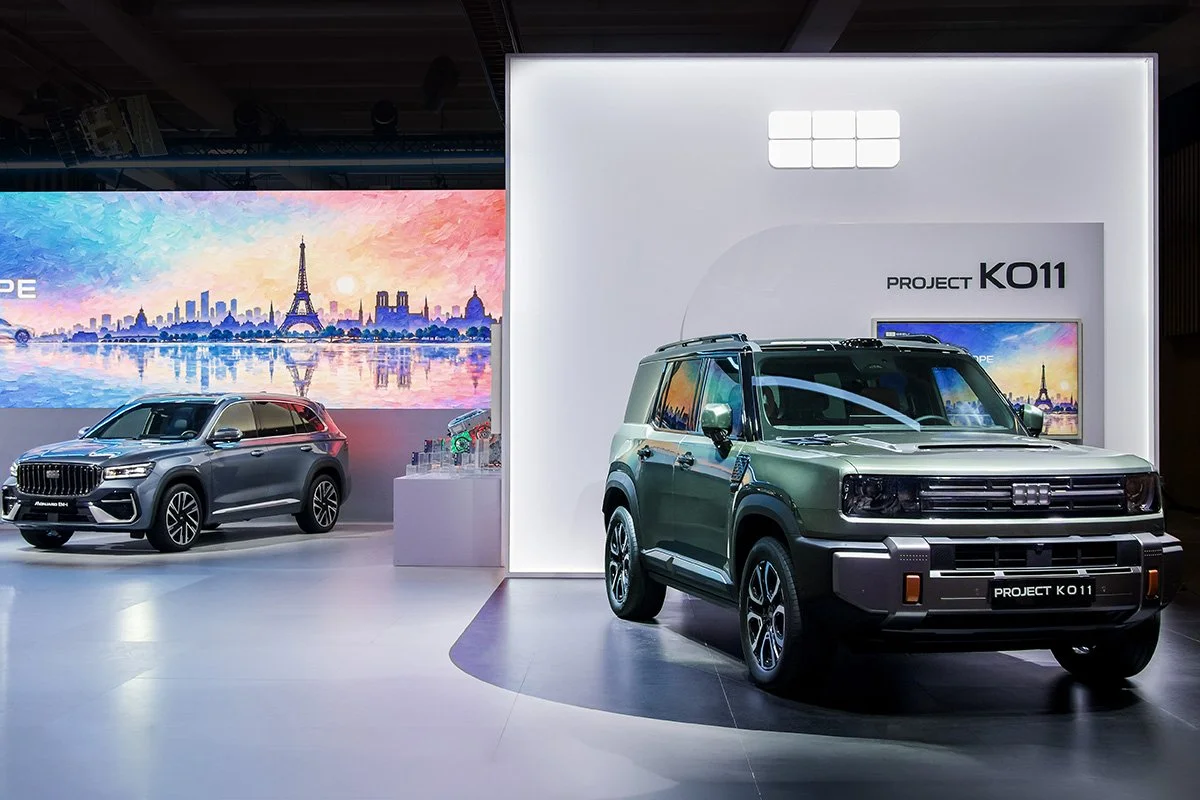
Geely’s new Mounjaro, and the Project KO11 at the Paris Motor Show (James Kelly)
A familiar name, even if you don't realise it
Unlike some of its Chinese compatriots, Geely has been quietly establishing itself in Europe for decades. The turning point was in 2010, when it bought Volvo Cars from Ford.
The purchase was initially met with understandable scepticism, but it set Geely on a path that's helped prepare it to take on European markets. European design studios, engineering teams and R&D centres have become integral to the group's operations. The result is an increasingly blurred distinction between what actually constitutes a Chinese car and a European one.
It's something I've been thinking about a lot recently. Particularly as the number of new badges on British roads continues to grow.
The Monjaro: A different sort of Geely
The most significant model for the Geely badge itself in Paris was the new Monjaro EM-i. This is a stonking great big PHEV, designed to take on family favourites like the Skoda Kodiaq.
On the face of it, there's nothing revolutionary here. Geely certainly isn't the first Chinese manufacturer to identify opportunities in this segment.
But a closer look at the Monjaro reveals what the company is hoping to achieve. The exterior is restrained, and inside the materials and tech wouldn't look out of place in any European rival.
Of course, none of that automatically makes it a good car. But Geely appears to understand that. The Monjaro has been developed with European driving characteristics in mind, including specific chassis tuning.
We'll have to wait and see if it can tempt customers away from established European badges, but if it follows the path of the Geely Starray, it'll likely pull it off.
And then for something completely different
So, the Monjaro's great. But the most intriguing Geely product in Paris was probably Project KO11. They took the covers off this rather imposing concept, which has more than a passing resemblance to the Land Rover Defender.
That's probably being generous. There are elements of Defender, Bronco and Land Cruiser all wrapped into it. So, originality might not be its strongest attribute.
But desirability might just be.
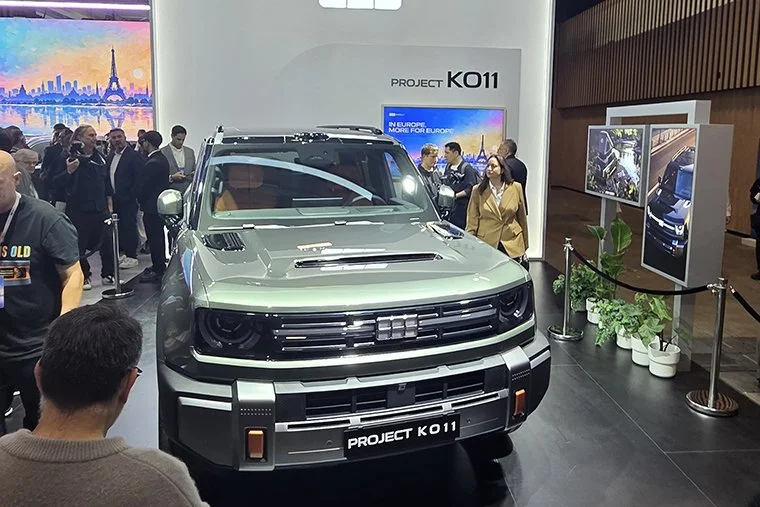
Not necessarily because it's a groundbreaking design, but because it shows Geely understands what Europe wants. The Defender occupies an interesting position in today's market. It was once a workhorse, but now it's a highly desirable lifestyle product. The fact Geely has recognised this shows it's certainly on the right track.
A production version is expected in 2027. Of course, heritage isn't something you can simply engineer into a new vehicle, but it's a particularly interesting product given how I started this article.
Is Zeekr coming to the UK?
Being on the show floor with Geely's global team was really interesting, as I got to experience some products that aren't, or at least aren't yet, available to UK consumers. The most interesting of these was probably Zeekr.
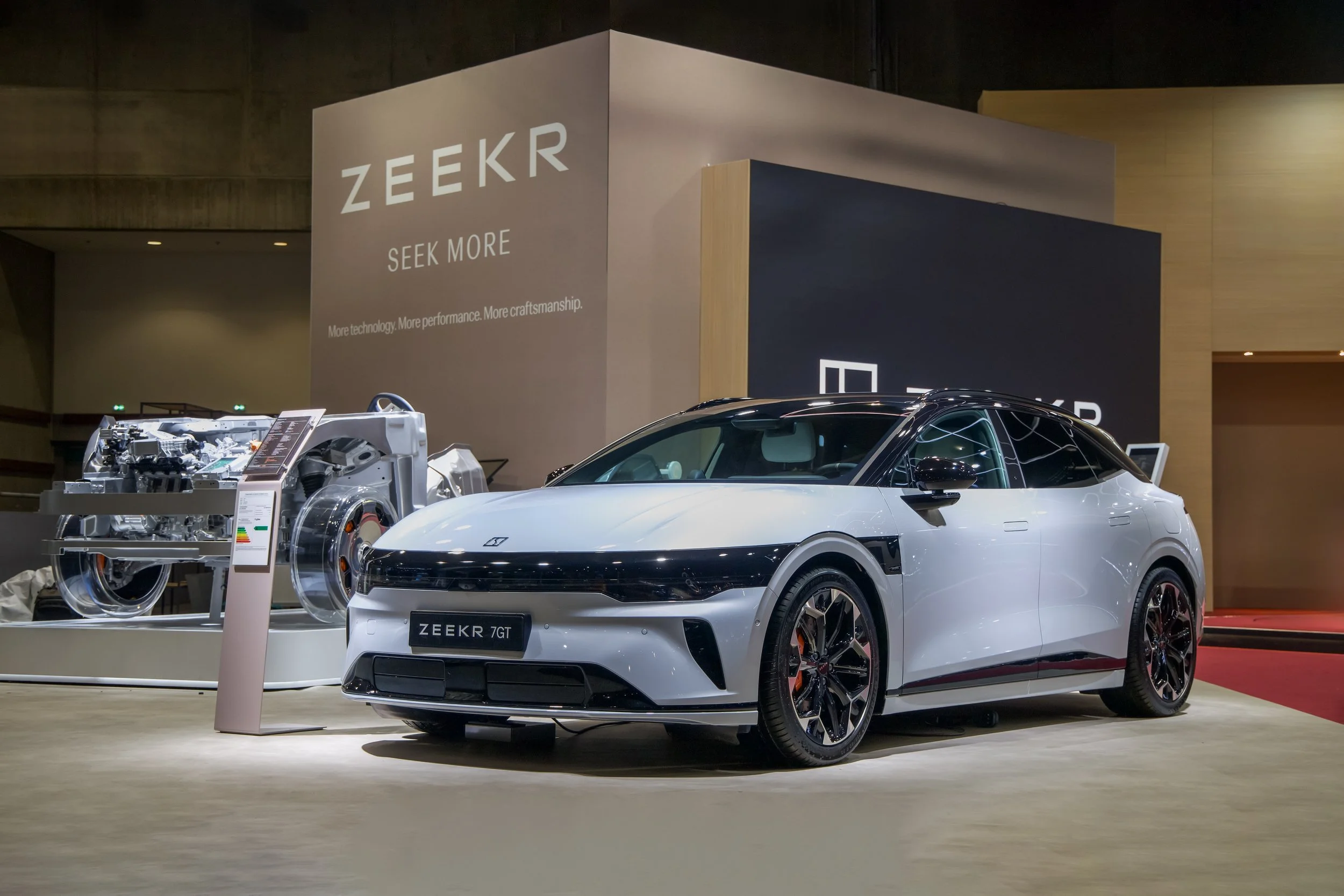
It's been confirmed for the UK, and, if its European success is anything to go by, it's a brand you might be hearing about a lot more often. The gargantuan 9X was the star of the Zeekr stand, and with styling that sits somewhere between a Rolls-Royce Cullinan and a London cab, it isn't exactly an exercise in understatement.
But more relevant for UK buyers are likely to be the 7X SUV and 7GT, both of which I got the chance to drive. On one hand, these are cars that show just how far the Chinese automotive industry has progressed in a relatively short period.
On the other, they show just how embedded Geely's European connections are. Zeekr's design team is in Gothenburg for starters, and forms part of a much wider network of engineering teams across the continent.
So, while these vehicles wear a Chinese badge, the expertise behind them is definitely international. That's what a lot of people seem to miss when the conversation turns to Chinese cars.
The automotive industry has always been international, of course. What's changing is the direction in which the technology, investment and influence flow; Geely and its brands are one of the best examples of this in action.